Mixed-use development has moved from trend to expectation. Across Central New York and cities nationwide, owners and developers are turning to integrated, walkable projects that combine residential, commercial, and community uses. Projects like VIP Structures’ The Post — a former newspaper facility transformed into Class A office space and apartments in downtown Syracuse — show what that looks like in practice. As urbanization and increased demand for downtown construction continues to reshape cities, this shift is remaking the fabric of urban areas and bringing neighborhoods back to life with social and economic activity.
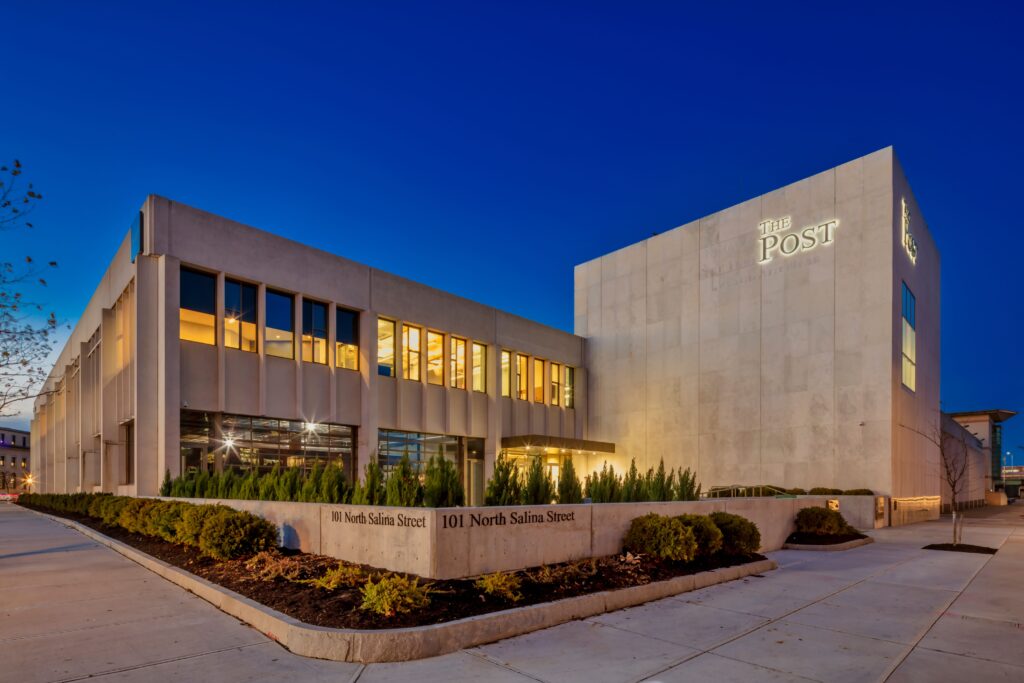
The Post Mixed-Used Development – VIP Structures transformed this 220,000 SF former Post-Standard newspaper facility into a mixed-use destination for downtown Syracuse. Phase 1 converted 84,000 SF into Class A office space, while Phase 2 brings 72 one- and two-bedroom apartments to the building’s former industrial printing floor — activating streets, supporting local businesses, and reinforcing downtown as a place to work, live, and invest.
What are Mixed-Use Developments?
Mixed-use developments are pedestrian-friendly buildings or districts that combine two or more uses, such as residential, commercial, industrial, institutional, hospitality, civic, or recreational space. The Urban Land Institute’s Mixed-Use Development Handbook defines mixed-use development as projects that:
- Provide three or more significant revenue-producing uses, such as retail, entertainment, office, residential, hotel, civic, cultural, or recreational uses
- Foster integration, density, and compatibility of land use
- Create a walkable community with uninterrupted pedestrian connections
In practical terms, mixed-use development brings multiple daily needs closer together. A single project or district may include apartments, offices, restaurants, retail, services, public gathering space, and community amenities — all designed to work together as part of a connected environment. Mixed-use development is on the rise in many communities. Learn more about the growth of mixed-use development.
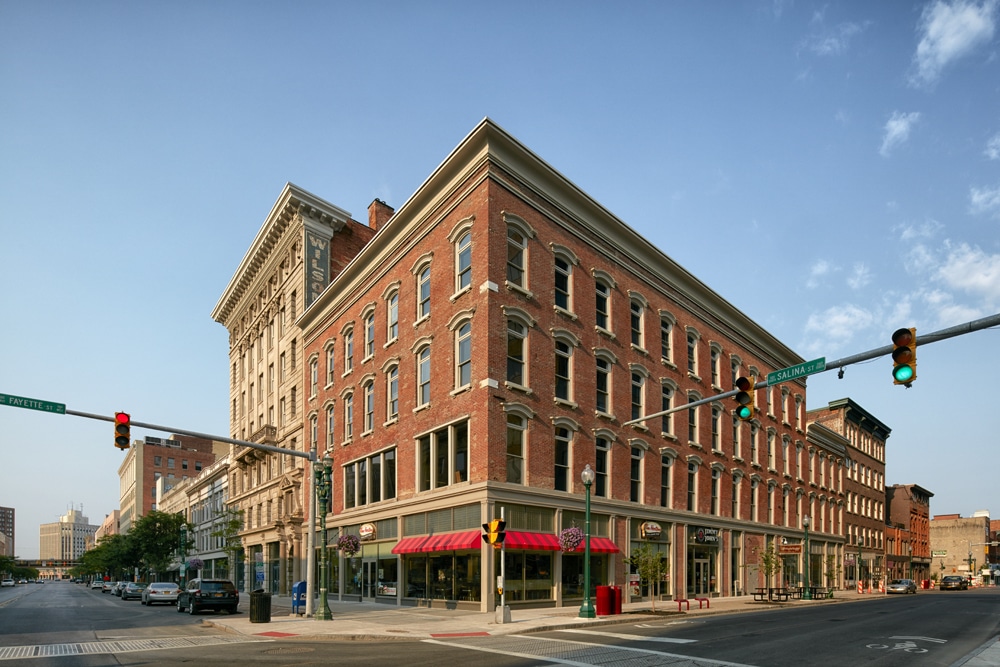
Pike Block, Syracuse, NY — VIP Structures redeveloped four adjacent historic buildings in downtown Syracuse into a unified mixed-use development, delivering 68 market-rate apartments and approximately 35,000 SF of flexible commercial space. The project helped reconnect the Armory Square Historic District with the South Salina Street corridor and turned four isolated structures into a cohesive downtown destination.
4 Benefits of Mixed-Use Developments
The creation of mixed-use spaces is bringing many benefits to urban areas. Here are 4 quick benefits:
Exploring a mixed-use or adaptive reuse opportunity?
VIP Structures helps owners and developers evaluate existing buildings, plan downtown redevelopment projects, and bring housing, commercial, and community-focused spaces to life across Central New York.
8 Trends in Mixed-Use Developments
The strongest mixed-use developments today are not just buildings with multiple uses. They are carefully planned environments that support how people live, work, gather, and move through a neighborhood. Here are several trends shaping mixed-use development in Central New York and beyond:
Trend #1: Designing for Connection and Community
One of the biggest drivers behind mixed-use development is the desire for connection. Residents, employees, visitors, and neighbors want places where they can gather naturally, meet others, and feel part of a larger community. That means common areas – lobbies, lounges, courtyards, roof decks, shared work areas, outdoor seating, and public gathering spaces – are being designed as intentional community assets. In residential mixed-use projects, these spaces help residents connect with one another. In larger developments, they can also strengthen the relationship between the building and the surrounding neighborhood.
Trend #2: Shared Amenities That Support Daily Life
Many residents are willing to trade some private square footage for access to shared amenities that improve convenience, comfort, and quality of life. Popular amenities may include fitness rooms, co-working spaces, community kitchens, lounges, children’s play areas, bike storage, package rooms, roof decks, outdoor seating, and flexible gathering areas. For owners and developers, the strongest amenities are useful, durable, and aligned with how residents actually live. Well-planned shared spaces can help differentiate a property, support leasing, and create a stronger sense of community.
Trend #3: Pet-Friendly Housing and Services
Pet-friendly design has become an important consideration in residential and mixed-use development. For many renters and buyers, pets are part of the household, and buildings that make pet ownership easier can have a competitive advantage. Pet-friendly features may include dog-washing stations, outdoor pet areas, nearby walking routes, durable flooring, and access to pet-related services. In some mixed-use developments, ground-floor retail may also include grooming, dog daycare, or pet supply businesses. This trend reflects a larger shift in development: successful projects are designed around the real routines and priorities of the people who live there.
Trend #4: Food, Beverage, and Neighborhood Retail
Restaurants, cafes, markets, and food-focused retail can play a major role in activating mixed-use developments. These uses bring people into the area, support street-level energy, and extend activity into evenings and weekends. Food and beverage tenants can also help a project feel more connected to the surrounding community. When restaurants and retail serve both residents and the public, they become part of the neighborhood experience — not just an amenity for the building. Everyday services also matter. Coffee shops, small markets, dry cleaners, salons, fitness studios, and convenience-oriented businesses can make urban living easier while creating consistent foot traffic for commercial tenants.
Trend #5: Public Space and Community Programming
Mixed-use developments are increasingly being planned as active places, not just collections of uses. Outdoor plazas, courtyards, pocket parks, sidewalks, and shared public spaces can support events, markets, performances, food trucks, art installations, and neighborhood gatherings. This type of programming helps bring a development to life. It also supports surrounding businesses by encouraging people to spend more time in the area. Projects like Pike Block in downtown Syracuse demonstrate how mixed-use redevelopment can create more than new residential and commercial space. Features like its courtyard and public passage help connect the project to the surrounding downtown environment and support a more active pedestrian experience.
Trend #6: Walkability, Access, and Everyday Convenience
Convenience continues to be one of the biggest advantages of mixed-use development. When housing, retail, services, workplaces, and public spaces are located near one another, residents and visitors can accomplish more with fewer trips. Walkability, parking strategy, public transportation access, bike storage, delivery access, and pedestrian experience all play a role in how well a mixed-use project functions. These considerations are especially important in downtown and urban infill locations, where buildings must connect smoothly with existing streets, sidewalks, utilities, and neighboring properties. The best mixed-use projects make daily life easier while also supporting a more active street-level environment.
Trend #7: Sustainable Design and Adaptive Reuse
One of the most meaningful sustainability strategies is making better use of existing buildings, infrastructure, and urban sites. Adaptive reuse plays an important role in mixed-use development because it allows vacant, historic, or underutilized buildings to serve new purposes. Former offices, warehouses, schools, industrial buildings, and commercial properties can be converted into housing, retail, office, hospitality, or community-focused space. These projects can be complex. Existing structures often require careful evaluation of building systems, code requirements, accessibility, structural capacity, historic features, and constructability. But when done well, adaptive reuse can preserve neighborhood character, reduce the need for new land development, and bring new economic activity to areas that already have infrastructure in place.
Trend #8: Housing Choice, Mixed-Income Development, and Affordability
Mixed-use development is increasingly tied to broader conversations about housing supply, affordability, and neighborhood access. Many communities need more housing options, including market-rate units, affordable units, workforce housing, senior housing, and mixed-income residential models. For developers and municipalities, the goal is not simply to add units. It is to create housing that supports a stronger, more diverse, and more resilient neighborhood. Mixed-use and adaptive reuse projects can help by bringing residential density to areas that already have access to services, infrastructure, transit, and employment centers. When paired with thoughtful planning, financing tools, and community priorities, these projects can contribute to more inclusive revitalization.
Projects like Pike Block in downtown Syracuse show how mixed-use redevelopment can combine historic character, residential space, commercial activity, and sustainability within an existing urban fabric. Wondering how underutilized historic buildings get revitalized? Learn how historic tax credits benefit architects, engineers, and construction firms.
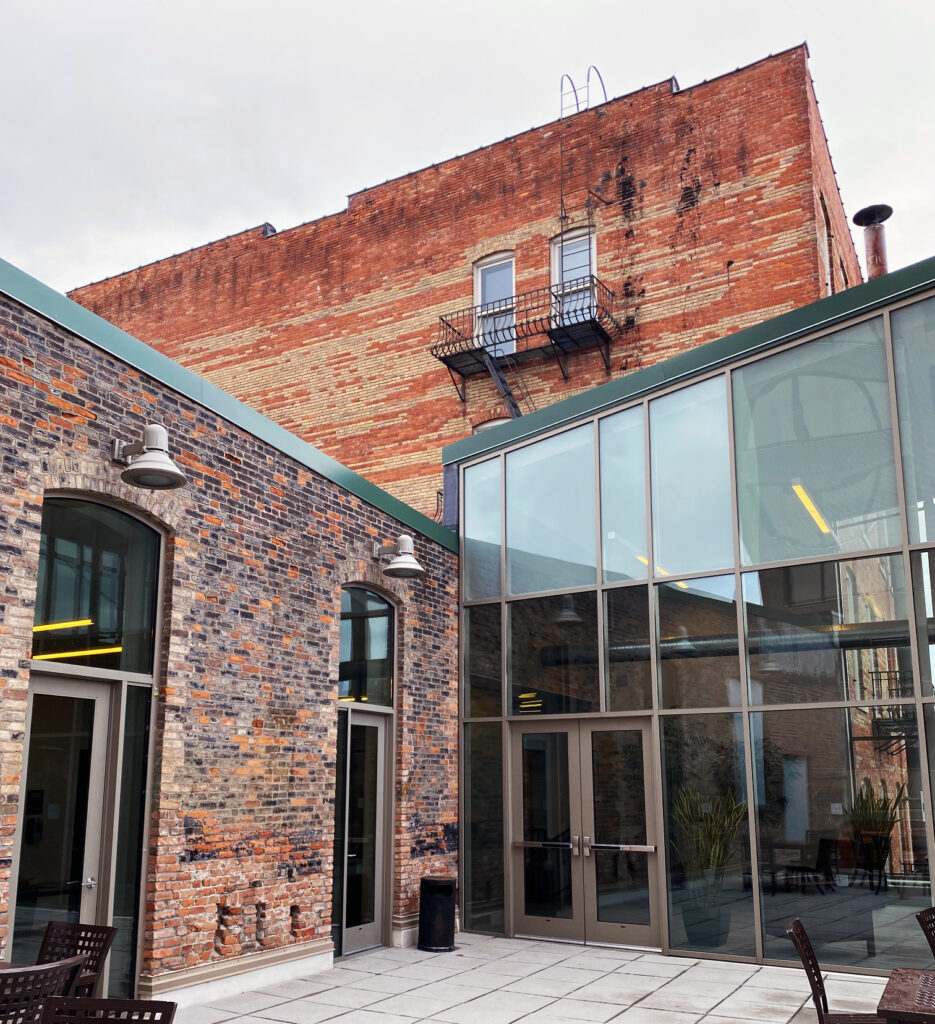
Pike Block was designed to LEED Silver standards, integrating geothermal heating, a solar array for domestic hot water, rainwater collection, low-VOC materials, and energy-efficient lighting — demonstrating how mixed-use redevelopment can preserve historic character while meeting modern sustainability goals.
Working on a mixed-use or adaptive reuse project in Central New York?
VIP’s integrated design-build team has delivered award-winning mixed-use developments across Syracuse and beyond.
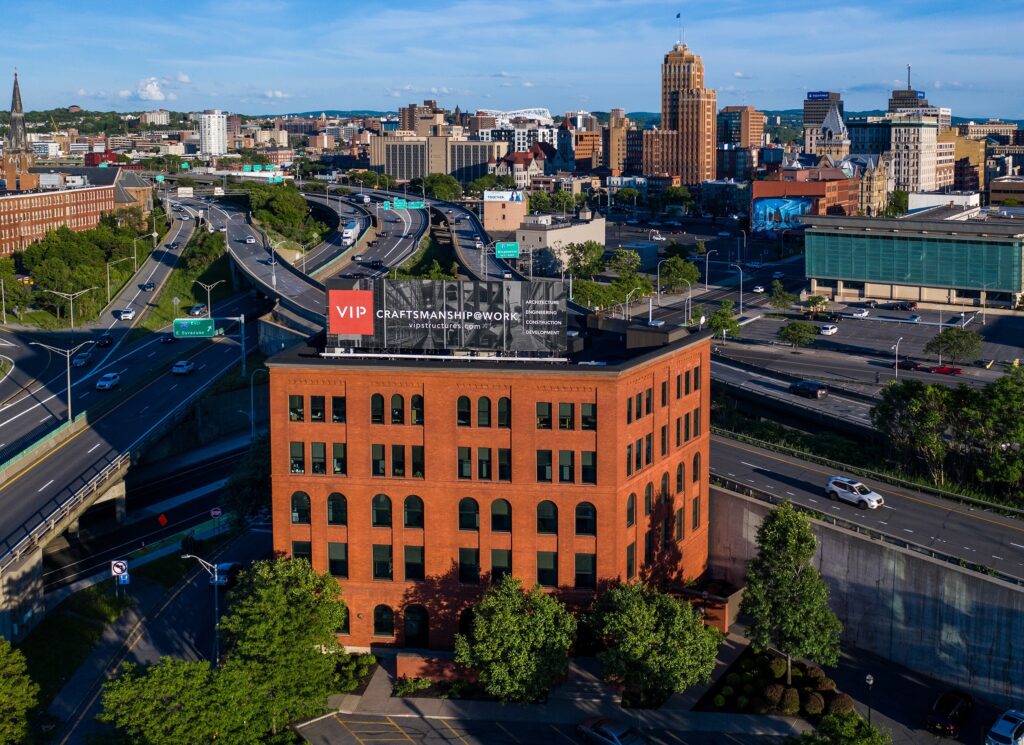
One Webster’s Landing is a 100-year-old historic building in downtown Syracuse. In 2024 VIP Structures transformed the former commercial space into 34 apartments. The new housing development provides high-quality, attainable downtown housing within walking distance of jobs, services, and public transit.
Planning a Mixed-Use or Adaptive Reuse Project?
Mixed-use and adaptive reuse projects require more than combining residential, commercial, and community space in one location. They require thoughtful planning, careful evaluation of existing conditions, and a team that understands how design, construction, financing, phasing, and long-term use all work together.
VIP Structures helps owners, developers, and project teams bring complex redevelopment projects to life across Central New York. From historic building conversions and downtown housing to mixed-use developments that activate underutilized properties, our integrated design-build team helps turn project vision into a buildable, functional, and community-focused reality.